
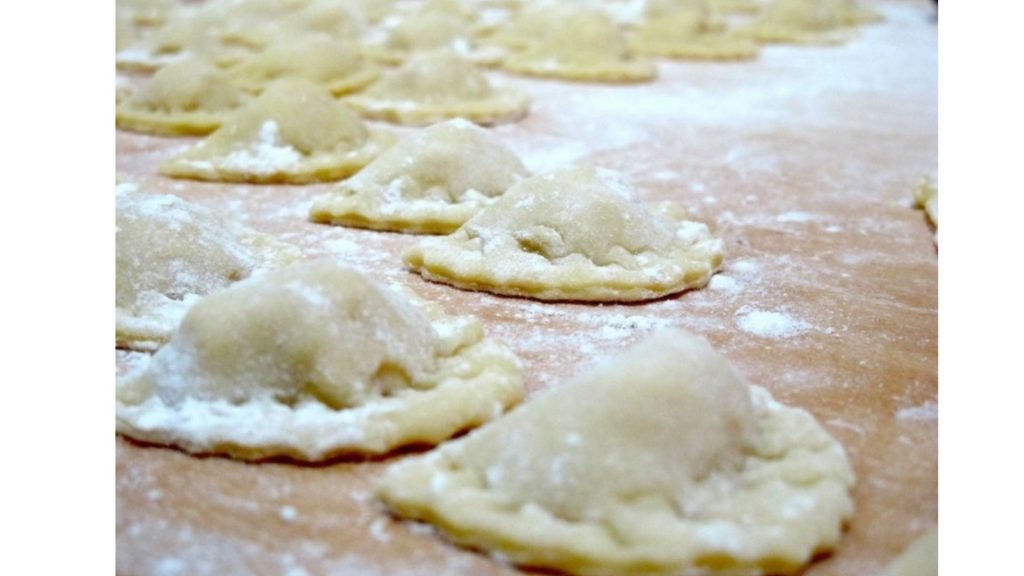
One of the oldest recipes in Abruzzo that takes form in various guises is for the famous calcionetti, cavcinitt, caggntt’ or caciunitt – deep-fried ravioli-shaped small pastries with a filling. The name and stuffing vary in different areas of Abruzzo. The most common are either a mixture of chickpeas sweetened with concentrated grape must or with just a basic grape jam. There are few homes in Abruzzo where some version is not made during the festive Christmas season.
When I first came to live in Abruzzo, the only recipe I knew was the chickpea version, which my family in Australia made religiously every Christmas. But my mother-in-law, Donnina, introduced me to an amazing version of calcionetti with honey and almonds. Her son, now my husband, is a beekeeper, so her supply of honey was abundant and it was her recipe of choice.
While in my town of Tocco da Casauria, where she lived and where I live now, the chickpea version was the norm, and she introduced her recipe from the province of Chieti to the locals. Considered the expert of the honey and almond calcionetti, Donnina eventually started making them for the whole town during the Christmas season.
Honey has accompanied, often behind the scenes, the history of Italian nourishment from the remote past to our current days. Used by the Etruscans as a votive offering, honey was mentioned for the first time by the Romans in detailed descriptions of its culinary usage, which was that of a sauce for savoury dishes.
Today, in Italian cuisine, honey is mostly used in desserts such as torrone, panforte and fritters. Honey is a favoured ingredient in southern cuisine, as the Southern part of Italy has experienced the strong influence of the Arabs, whose palates have a preference for sweet and sour combinations. A spoonful of honey can sweeten a glass of tea, turn a plain piece of bread into a treat, glaze a delicious barbecued sparerib, or serve as the basis for an unforgettable salad dressing.
Calcionetti with Almonds and Honey
Ingredients
(Makes about 40 small calcionetti)
For the filling:
300 gr of almonds, preferably unpeeled as they have more flavour; you will peel them at a later stage
3 tablespoons of firm honey (millefleur or similar)
For the pastry:
600 gr all-purpose flour
150 ml extra virgin olive oil
300 ml white wine
Vegetable oil for frying
Preparation
Boil the almonds for two minutes, strain and peel. Place almonds on an oven tray and toast in the oven until they are golden. Cool and chop finely.
Mix them with the honey and place in fridge while you prepare your pastry.
Place your flour on a pastry board and create a well in the centre. Pour wine and oil in the formed well and add a pinch of salt. Knead the dough gently until it doesn’t stick to your hands and is easy to handle, but do not overdo it.
Cut thick dough slices and roll them into long strips (approximately 3 mm thick and 7 cm wide) with a rolling pin or a pasta machine.
Place a teaspoon of the honey and almond mixture in the centre of your pastry strip, ensuring there is sufficient space between the scoops for sealing the edges.
Fold the dough over, seal the edges and cut ravioli-like shapes with a pastry cutter.
Seal each calcionetto gently with fork tines and place on a floured surface while you prepare the rest.
Heat up the vegetable oil in a pot (at least an inch) and deep fry the calcionetti until golden brown. When they have completely cooled, sprinkle with icing (powdered) sugar.
By Connie De Vincentis. Connie runs a home restaurant and cooking schoolin Tocco da Casauria.
Curious to know more about Abruzzo? Subscribe to ABRUZZISSIMO Magazine for a deep dive into the region’s history, culture, travel tips, and stories about the people living here.