

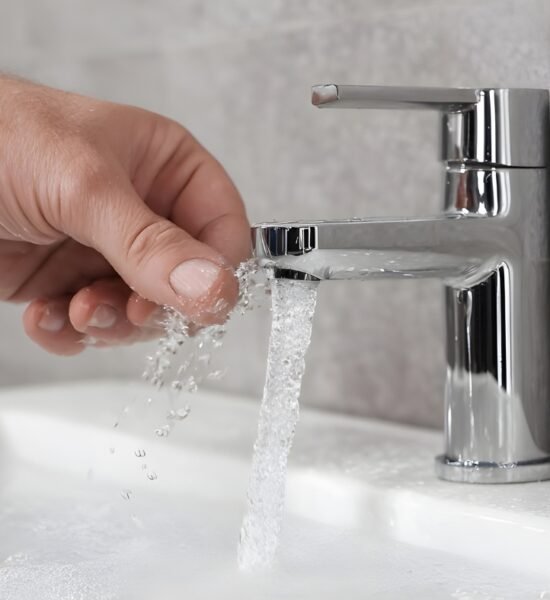
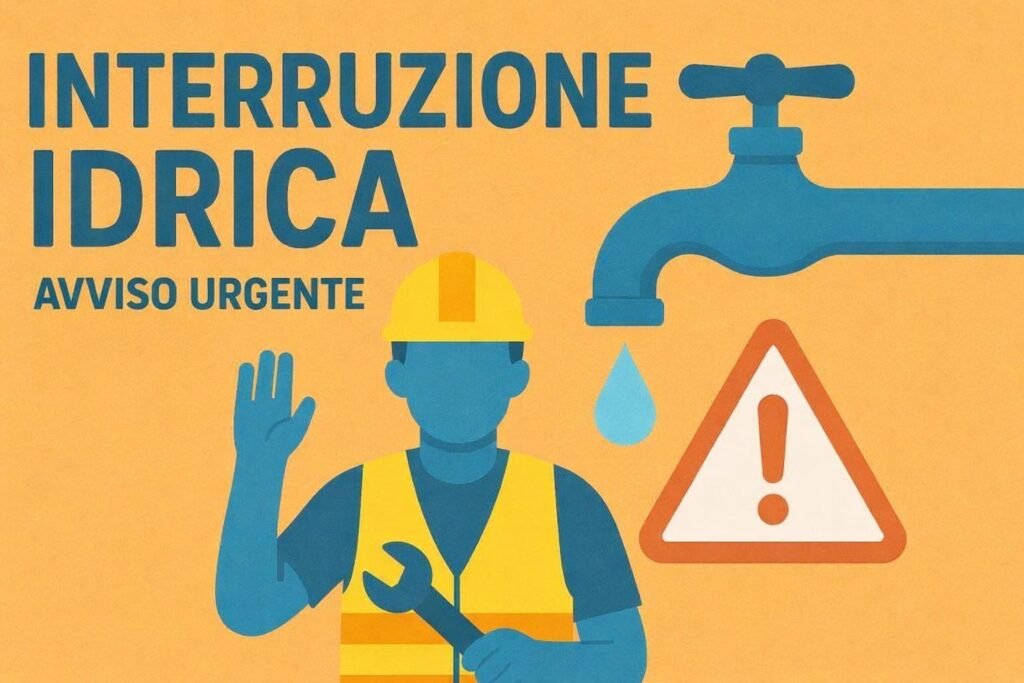
On 13 April 2026, more than 250,000 people across 22 municipalities in the provinces of Pescara and Chieti go without water for at least 24 hours – an uncomfortable reminder that Abruzzo, a region rich in springs and rivers, has one of the worst water supply records in Italy and a serious water crisis.
Schools, markets, museums and sports facilities will close by mayoral order as reported by ANSA. The interruption – which may last through 14 April if water quality is affected by the works – is necessary to connect the existing water supply network to newly built pipes across 11 active worksites on the Acquedotto Giardino, the region’s principal water supply system. (For a full list of municipalities affected by the shutdown, see the ACA website).
The inconvenience is real. But the works are necessary – and they are decades overdue.
A Pipeline Built for Another Era
The Acquedotto Giardino, fed by the San Rocco well field at Bussi sul Tirino, is the backbone of Abruzzo’s water supply network. Its pipes stretch approximately 160 kilometres from mountain springs to the city of Pescara, serving Chieti, Pescara and dozens of surrounding municipalities – a catchment area of around 500,000 people at peak capacity. The concrete tubes were laid largely in the 1960s; the pipeline first brought water to Chieti and Pescara in 1958. It is infrastructure that is nearly seventy years old.
The result has been decades of patching. A local water activist group, the Forum Abruzzese dei Movimenti per l’Acqua, described the pipeline as “a real colander,” noting that one leak near Manoppello (PE) had been reported to the responsible authorities since at least 2004 with no action taken. Major works to upgrade the Acquedotto in Pescara began last year and are continuing, bringing traffic disruption and road closures – inconveniences the city has largely accepted as the price of doing something that should have been done long ago.
Abruzzo’s Water Crisis by the Numbers
Abruzzo is a region of rivers, mountain springs and abundant rainfall. It is also, by a significant margin, the Italian region with the highest rate of water dispersal: 55.6% of water that enters the network is lost before it reaches a tap, according to data from Openpolis.
More than half of what is drawn from the source simply disappears into the ground along the way.
The figures for individual cities make the Abruzzo water crisis even harder to ignore. Chieti, L’Aquila and Pescara all rank among the thirty Italian provincial capitals with the highest water losses. In 2020, Chieti recorded the single worst figure in the entire country: 71.7% of water entering its network was lost before reaching any household. That year, 673 litres per resident per day were pumped into Chieti’s network; only 191 litres were actually delivered. The rest was gone.
EU Recovery Funds Are Financing the Fix
The current works on the Acquedotto Giardino are funded through the Piano Nazionale di Ripresa e Resilienza (PNRR) — Italy’s EU-backed recovery plan. The intervention in Pescara alone amounts to €15 million. Across the region, Abruzzo has received around €113 million in PNRR funds for water infrastructure across three separate measures, according to Openpolis, though analysts note that the investments tend to prioritise expanding capacity over repairing what already exists.
Water crisis in Abruzzo is becoming a serious problem with more than half the water drawn from the source never arrives at the tap. There is an urgency to all of this that goes beyond old pipes. Every litre lost in transit is a litre that cannot be recovered. With rainfall decreasing and temperatures rising, an efficient water management is needed urgently.
Subscribe to ABRUZZISSIMO to read more about the region’s history, traditions, food and more
Sign up here to read it


